Pallets in Chattanooga, TN
Paid collection, asset tracking and leakage reporting — and a straight answer about what we can and cannot do here.
Request a Chattanooga quote
Postal code and volume are what we need to answer properly. If a local yard would serve you better, the reply will say so.
- Service model
- Network & sourcing
- State
- Tennessee
- Focus here
- logistics
- Corridors
- I-40 · I-24
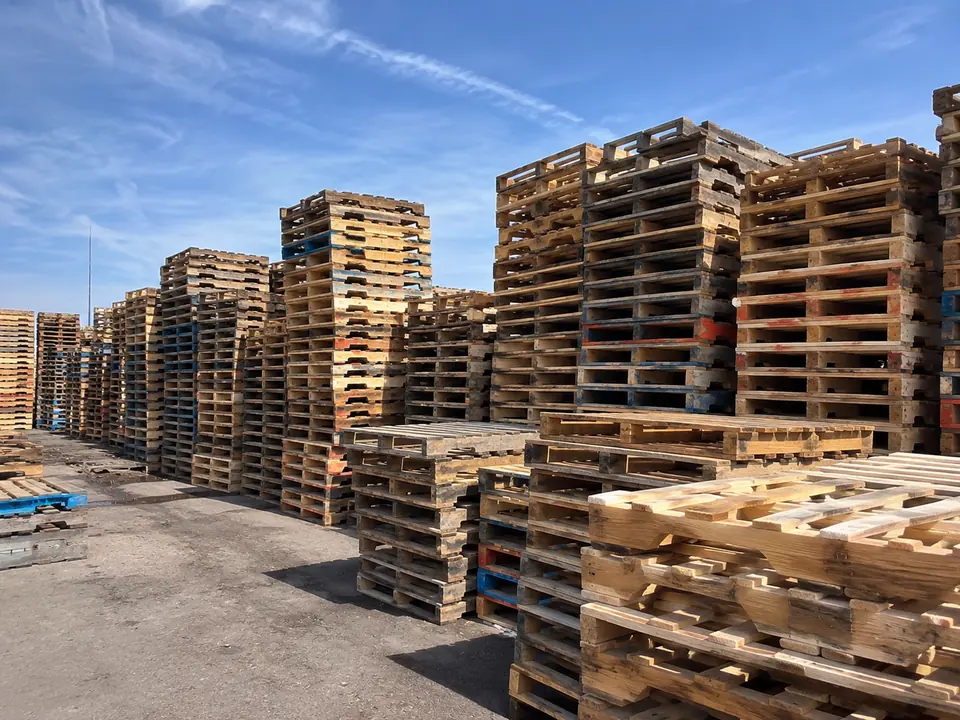
Chattanooga shippers ask us for a price and we usually ask three questions back: what the pallet has to carry, whether it goes into racking, and whether it ever comes back. The answers change the number far more than the Tennessee market does.
We would rather sell a reused pallet than a new one, and we will say so even when the new build carries the better margin. Eighteen years in the same postcode has made that less of a principle and more of a business model.
Chattanooga in one line
Chattanooga is a freight crossroads, where empties pile up faster than anybody plans for. In practice that means the work here concentrates on paid collection, asset tracking and leakage reporting — and that the pallet specification which suits a neighbouring market may be exactly wrong for this one.
- Market
- Chattanooga, Tennessee (TN)
- Character
- logistics — a freight crossroads, where empties pile up faster than anybody plans for
- Focus of the work here
- paid collection, asset tracking and leakage reporting
- Service model
- Network & sourcing — Partner yards locally, specification and sourcing from us.
- Corridors
- I-40 · I-24 · I-65 · I-75
- Ports in state
- None — inland
- Climate band
- Humid subtropical, 12–17% outdoor equilibrium, higher in summer
- Dominant wood risk
- Mould — the dominant regional risk
| Detail | Why it matters | |
|---|---|---|
| Service model | Network & sourcing | Partner yards locally, specification and sourcing from us. |
| Main corridors | I-40 · I-24 · I-65 · I-75 | How freight reaches this market |
| Local sectors | parcel and air freight, automotive, healthcare distribution | What drives pallet demand here |
| This market | paid collection, asset tracking and leakage reporting | a freight crossroads, where empties pile up faster than anybody plans for |
| Yard | 16550 Bratton Ln, Austin TX 78728 | Specification and sourcing from here, wood sourced locally |
What a freight crossroads needs
Freight hubs generate empties faster than anybody plans for, and the default response — stacking them out back until somebody hauls them away — is the only arrangement in this trade that costs money rather than making it. A yard that pays and collects weekly removes the pile and sends a cheque for it.
The second hub problem is asset identity. In a multi-client building, pallets belonging to four customers sit in one stack, and nobody knows which. The fix is not technology; it is one field on the bill of lading recording units out, plus monthly zone reconciliation. That takes half a day a month and turns an invisible cost into a billable line.
The third is fire load. An idle pallet stack is dry wood arranged for maximum air flow — functionally kindling at industrial scale — and it is almost always sitting somewhere nobody designed for it. Holding fewer empties for less time does more for that than any amount of signage.
What to put in writing for a Chattanooga operation
| Put in writing | What to say | Why it matters in Chattanooga |
|---|---|---|
| Collection cadence | Weekly or on-call, routed | Paid, counted on the dock, signed |
| Grade split by client | One written standard per account | Stops your yard absorbing the difference |
| Outbound count | One BOL field | Lets you bill loss to the account that caused it |
| Staging area | Marked, with a stack height limit | Insurance survey item as well as an operational one |
| Damaged pile | Separate and sell it | Broken units are raw material, not waste |
What to watch for
The unsolicited hauler
Somebody offering to take empties away free is buying inventory at a hundred percent discount. They will sell it the same week.
Mixed footprints
A load of mixed sizes is worth noticeably less than the same count sorted. Sort as you stack.
Holding cover
Seven to ten days is enough with a reliable fixed delivery day. Six weeks is rent.
What we do for Chattanooga
- Specification and written grading standards for your line
- Sourcing: we find, vet and price local yards for you
- Multi-site pallet programme design and monthly reporting
- Export crating and ISPM-15 documentation review
- Load-case and racking advice before you buy anything
- Full-truckload supply where the lane genuinely works
| Service | Lead time | Minimum | Notes |
|---|---|---|---|
| Paid pallet collection, Austin metro | 48 hours, routed | 100 units or 1 trailer | Counted with your team present, signed on the dock |
| Paid collection, Texas Triangle | Weekly, fixed day | 1 trailer | Backhaul lanes to SA, Houston, DFW |
| Yard drop-off | Open during yard hours | 5 units | Saturday mornings are easiest; no appointment |
| Spot load, common footprint | 2–5 business days | 25 units delivered | Subject to grade availability |
| Standing order | Fixed day each week | By agreement | Annual pricing, ≈2 weeks of safety stock held here |
| Repair, toll (your units) | 3–7 business days | 100 units | Your asset numbers and stamps retained |
| Heat treatment & ISPM-15 stamping | Usually 24 hours | By agreement | 4–9 hour cycle; chart trace filed per lot |
| New build to spec | 5–10 business days | 100 units | Tolerance ±⅛" achievable |
| Cut-down to custom footprint | 3–6 business days | 50 units | Tolerance ±¼" |
| Custom crate, one-off | 3–8 business days | 1 | On-site crating available in Austin metro |
| Custom milling, cut list | 3–6 business days | 1 shop hour | Tolerance ±1/16" dimensional |
| Bulk mulch or bedding | 2–5 business days | 10 cu yd | 60 mile delivery radius |
| Sourcing audit | By arrangement | 500 units/week | Half a day on site; free above that volume |
| Same-day, Austin metro | Same day | By arrangement | Premium rate, when a line is about to stop |
All times Central. Lead times are commitments we take seriously and not guarantees against weather, road closure or equipment failure.
Moisture and climate in Tennessee
| Detail | |
|---|---|
| Climate band | Humid subtropical |
| Outdoor equilibrium moisture | 12–17% outdoor equilibrium, higher in summer |
| Dominant wood risk | Mould — the dominant regional risk |
| Seasonal window | May to September is the high-risk window, with the worst mould claims arriving in August and September. |
Warm and wet is the worst combination for wood packaging. Equilibrium moisture content runs in the low-to-mid teens and climbs in summer, and the temperature is high enough that mould moves from a theoretical risk to a visible one in days rather than weeks. Nearly every recurring 'the pallets ruined our cartons' problem in this band is a moisture-content problem that nobody measured.
What to do about it in Tennessee
- Put 19% maximum in writing as a baseline, and 15% for anything touching food or going into a chilled environment.
- Name the measurement method in the specification: pin meter on random units per lot, reading recorded. 'We keep them inside' is not a measurement.
- Cover outdoor stacks, and rotate so nothing sits in the weather for a month.
- Buy a pin meter yourself. It costs less than one mould claim and takes twenty seconds a unit.
- Check the back of an arriving trailer, where the rain got in — not the front, where it looks fine.
The three questions worth answering before you buy
- What does the pallet have to carry, and how is it supported? A static rating is the biggest and least useful number; the racked rating — load on two rails with nothing underneath the middle — is typically 25–35% of it and is what actually limits a warehouse.
- Does anything automated touch it? Scanners, powered jacks and robotic palletisers care about squareness, entry height and deck gap. A perfect Grade A with 4-inch deck gaps will still drop a carton through your rollers.
- Does it come back? Above roughly 85% return, pooling and fleet ownership both make sense. Below 50%, your pallet is packaging and should be priced like it.
| Construction | Static | Dynamic | Racked (unsupported) | Unit weight |
|---|---|---|---|---|
| Recycled GMA 48×40 stringer, sound | 4,600 lb | 2,800 lb | 1,500 lb | 33–45 lb |
| Recycled 48×40 block, sound | 5,200 lb | 3,000 lb | 1,900 lb | 40–55 lb |
| Recycled 48×40 stringer, repaired (B) | 4,400 lb | 2,650 lb | 1,400 lb | 35–48 lb |
| New southern yellow pine, 5 top boards | 4,200 lb | 2,500 lb | 1,400 lb | 33–38 lb |
| New mixed hardwood block, 7 top boards | 6,000 lb | 3,500 lb | 2,400 lb | 48–58 lb |
| Heavy-duty new build, doubled stringers | 9,000 lb | 5,000 lb | 3,800 lb | 62–78 lb |
| Skid (no bottom deck) | 3,800 lb | 2,200 lb | Not for racking | 24–32 lb |
Representative planning figures for sound stock, not engineering certifications. Racked ratings assume the load spans two rails with nothing under the middle. Derate a further 20–30% for dwell times beyond a few weeks, because wood creeps under sustained load.
- Overall footprint
- ±¼" is normal in recycled stock. ±⅛" is achievable on new builds and worth paying for only if you run automation.
- Squareness
- Diagonal difference under ½". Beyond that, racking and ASRS reject it, and stretch wrap tightens on two corners and slackens on the other two.
- Deck gap
- Typically 3½" between boards. Conveyor lines often need a maximum of 3". Specify the number in inches — it is not implied by a grade.
- Entry height
- Nominal 3½". A repair with thicker boards can lose ¼" and still look fine, then wedge a powered pallet jack.
- Board thickness
- Nominal ⅝" may measure 0.60–0.66". Specify a minimum if deck flatness matters to your product.
- Protruding fasteners
- Zero tolerance. Any nail standing above the deck surface condemns the unit at our bench.
- Moisture content
- 19% is the mould threshold and our standard ceiling. 15% on request for food contact and chilled service.
- Bark
- Some export destinations require debarked wood. Ask before you load, not after.
A written standard beats a better price
Maximum deck gap, minimum board thickness, permitted repairs, moisture ceiling, stamp requirements. Agreed once with your Chattanooga operation, then graded to forever — by us or by whichever yard supplies you.
How grading worksHow to specify, in ten lines
- Footprint, length first, in inches — and the carton pattern that produced it, so we can check for overhang.
- Construction: stringer or block, two-way or four-way entry. Specify block if you cannot control racking orientation.
- Maximum deck gap in inches. This is the number that decides whether a carton falls through your rollers, and no grade implies it.
- Minimum entry height if you run powered pallet jacks. Repairs with thicker boards quietly eat clearance.
- Squareness tolerance. ±¼" for racking and automation; ±½" is fine for floor storage and cheaper.
- Moisture ceiling, with the measurement method named. 19% standard, 15% for food contact or chilled service.
- Treatment: HT and ISPM-15 marked, and re-marked after any repair introducing untreated wood.
- Species, if stiffness matters. Mixed hardwood for racked service; southern yellow pine where nothing spans anything.
- Permitted repairs: plates allowed or not, companion boards allowed or not. Automation usually wants neither.
- Load case: weight, support condition, dwell time, whether it stacks. This is what lets us pick the grade rather than you guessing it.
Can you supply pallets in Chattanooga?
Not directly from Austin — the freight would cost more than the wood. We source through a vetted yard in your market and bring the specification, grading standard and reporting ourselves.
What grade should a Chattanooga logistics operation buy?
Tell us the job and let us pick. For paid collection, asset tracking and leakage reporting, the specifications that actually matter are in the table above — and in most cases a cheaper grade with the right dimensional clauses outperforms a higher grade bought on its name.
What is the single most common mistake you see here?
The unsolicited hauler. Somebody offering to take empties away free is buying inventory at a hundred percent discount. They will sell it the same week.
Does the Tennessee climate change what I should specify?
Yes. Humid subtropical conditions, outdoor equilibrium around 12–17% outdoor equilibrium, higher in summer, and mould — the dominant regional risk as the dominant risk. Put 19% maximum in writing as a baseline, and 15% for anything touching food or going into a chilled environment.
Do you buy used pallets in this market?
Not directly — a collection trailer from Austin would cost more than the pallets are worth. But do not pay a hauler to remove them either: we will name a local yard that pays, and tell you what a fair rate looks like so you can judge the offer.
How fast can you answer a request?
Usually the same morning during yard hours, always within one business day. We have no phone line, on purpose — email reaches a coordinator who can see the sort yard from their desk, and a written thread is traceable when a load is disputed three weeks later.
Nearby in Tennessee
Nashville, TN
Retail distribution, food service and third-party logistics.
logisticsMemphis, TN
Paid collection, asset tracking and leakage reporting.
industrialKnoxville, TN
Heavy loads, racked ratings and tight dimensional tolerances.
industrialClarksville, TN
Heavy loads, racked ratings and tight dimensional tolerances.
metroMurfreesboro, TN
Retail distribution, food service and third-party logistics.
logisticsJackson, TN
Paid collection, asset tracking and leakage reporting.
metroFranklin, TN
Retail distribution, food service and third-party logistics.
Reference appendix
The same tables wherever you are reading this from: what we supply, what it weighs, how many fit on a trailer, and how long it takes.
Footprints and trailer counts
| Footprint | Inches | Millimetres | Construction | Where it lives | Our stock | Per 53' van |
|---|---|---|---|---|---|---|
| GMA 48×40 | 48" × 40" | 1219 × 1016 | Stringer & block | Grocery, general distribution, retail | Deep | 480–560 |
| 48×48 | 48" × 48" | 1219 × 1219 | Stringer | Drums, reels, wire, square loads | Good | 392–420 |
| 48×45 | 48" × 45" | 1219 × 1143 | Stringer | Automotive, tyre | Good | 420–450 |
| 48×42 | 48" × 42" | 1219 × 1067 | Stringer | Telecom, paint, coatings | Good | 440–480 |
| 42×42 | 42" × 42" | 1067 × 1067 | Stringer | Chemicals, drums, paint | Good | 480–520 |
| 40×48 | 40" × 48" | 1016 × 1219 | Stringer | Beverage, rotated GMA | Good | 480–560 |
| 40×40 | 40" × 40" | 1016 × 1016 | Stringer | Dairy, beverage, bakery | Good | 520–580 |
| 36×36 | 36" × 36" | 914 × 914 | Stringer | Compact, display, light goods | Good | 640–700 |
| 32×30 | 32" × 30" | 813 × 762 | Stringer | Retail display, in-store | Limited | 900+ |
| 30×30 | 30" × 30" | 762 × 762 | Stringer | Light goods, display | Limited | 960+ |
| 48×20 half | 48" × 20" | 1219 × 508 | Stringer | Retail half pallet, promotions | Limited | 1,000+ |
| EPAL 1 | 47.24" × 31.50" | 1200 × 800 | Block, 9 blocks | European trade, retail | To order | 540–600 |
| EPAL 2 / ISO | 47.24" × 39.37" | 1200 × 1000 | Block | Europe, Asia, best container fit | To order | 480–520 |
| Asia square | 43.30" × 43.30" | 1100 × 1100 | Block | Japan, east Asia | To order | 460–500 |
| AU square | 44.88" × 44.88" | 1140 × 1140 | Block | Australia, chemical CP series | To order | 440–480 |
Trailer counts are for stacked, unstrapped loads of sound recycled stock and vary with repair thickness. We confirm the actual count on the bill of lading rather than estimating it. Anything not on this list we cut from reclaim — see custom milling.
Grades
| Grade A | Grade B | #1 premium | #2 economy | Custom cut | |
|---|---|---|---|---|---|
| Original boards | All | Some replaced | All | Several replaced | Mixed |
| Companion boards | None | Permitted | None | Permitted | Permitted |
| Stringer plugs | None | Permitted | None | Permitted | Permitted |
| Metal plates | None | Permitted, disclosed | None | Permitted | Permitted |
| Squareness | Within ¼" | Within ½" | Within ¼" | Within ½" | Within ½" |
| Colour uniformity | High | Mixed | High | Mixed | Mixed, fresh saw ends |
| Protruding fasteners | Zero | Zero | Zero | Zero | Zero |
| Moisture ceiling | 19% (15% on request) | 19% | 19% (15% on request) | 19% | 19% |
| Typical service | Retail-facing, export | Internal, bulk | Automation, racking | One-way, yard storage | Odd footprints |
| Relative price | Highest recycled | −18 to −30% | High | Lowest | ≈⅓ of a new build |
| Remaining life | Longest | Shorter — already repaired once | Longest | Shortest | Varies |
Grade A and #1 overlap: we use #1 for units that needed no repair at all and A for units that are cosmetically uniform. Where a customer holds their own written standard, that document governs and supersedes these names.
Container and trailer fit
| Equipment | Internal width | Internal length | 1200×1000 per floor | 1200×800 per floor | 48"×40" per floor |
|---|---|---|---|---|---|
| 20' standard container | ≈2,352 mm | ≈5,898 mm | 10 | 11 | 10 |
| 40' standard container | ≈2,352 mm | ≈12,032 mm | 20–21 | 23–24 | 20–21 |
| 40' high cube container | ≈2,352 mm | ≈12,032 mm | 20–21 | 23–24 | 20–21 |
| 45' high cube container | ≈2,352 mm | ≈13,556 mm | 23–24 | 26–27 | 23–24 |
| 53' domestic dry van | ≈2,591 mm | ≈16,154 mm | 26 | 30 | 26 |
| 48' dry van | ≈2,591 mm | ≈14,630 mm | 24 | 27 | 24 |
Floor positions only; stacking depends on product height and weight. The fundamental tension in global freight is in this table: a 40-foot container's internal width does not comfortably take two 48-inch pallets, because the container and the American pallet were standardised in different traditions and never reconciled.